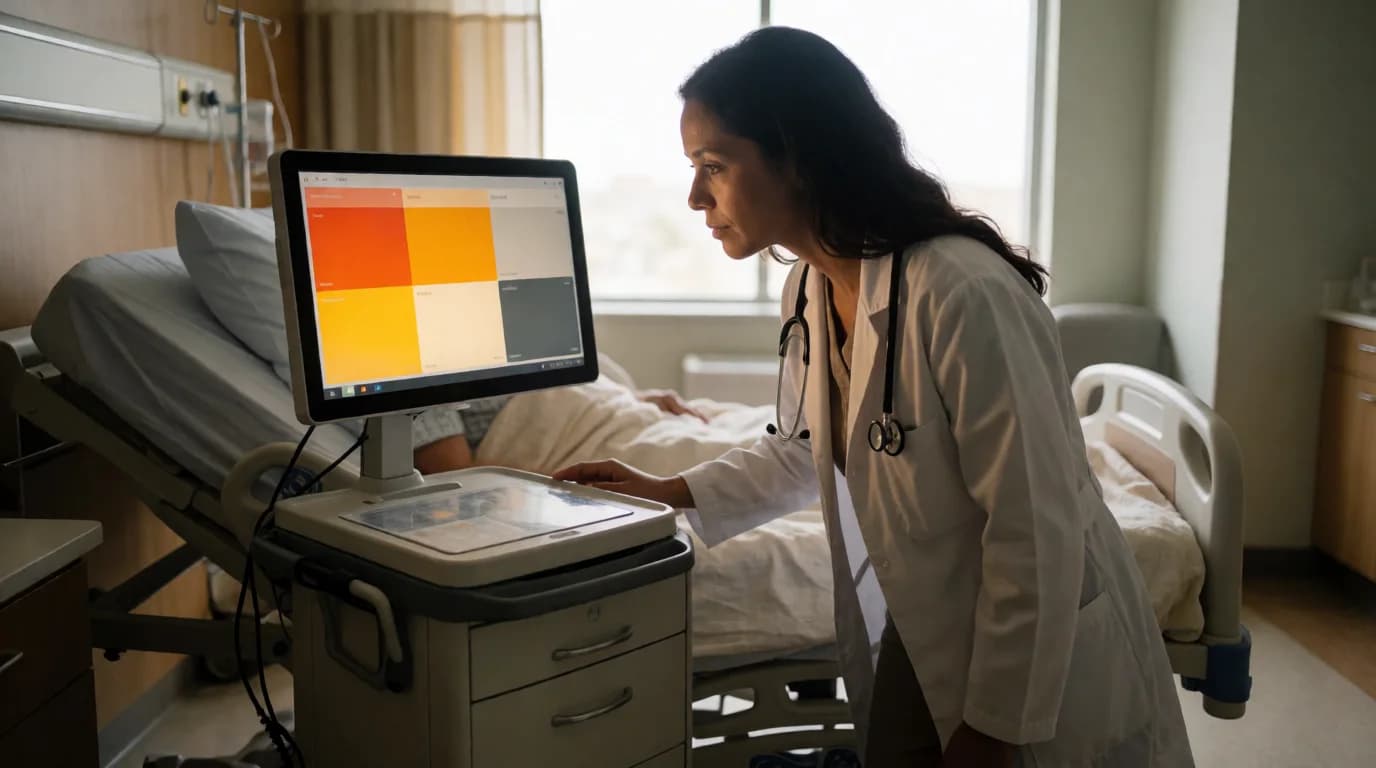
In 2024, 71% of US non-federal acute care hospitals used predictive AI integrated with the EHR, up from 66% a year earlier. Adoption is uneven: 86% of hospitals in multi-hospital systems, against 37% of independent hospitals.
Why early warning matters
The World Health Organization estimates that sepsis affected 49 million people in 2017 and was linked to about 11 million deaths, one in five worldwide. Earlier recognition is an obvious goal for decision support, and it is also where the evidence calls for care: results from sepsis prediction models have been mixed, and local validation matters.
Start from the task
Identify a task that is time-consuming and well understood. Consider what support would help, and only then ask whether AI is the appropriate way to provide it.
Show the reasons
People need to see the basis of a suggestion and be able to overrule it. A risk score without its contributing factors asks for trust it has not earned. Accountability stays with the clinician.
Measure the effect, not the model
Accuracy on a test set is not the outcome. Track whether alerts are acted on, how many are ignored, and whether care actually changes.